Benjamin Montet

Hi there! I'm a Scientia Associate Professor in the School of Physics at the University of New South Wales, where I lead the NEarby Worlds and Their Stars (NEWTS) group. That link takes you to our group's webpage. Our research group is focused on finding and understanding new planets orbiting stars other than the Sun, and developing new methods to better understand how stellar activity changes across stellar lifetimes. To do these, we use data from the NASA Kepler and TESS missions, as well as from ground-based facilities in Australia and abroad.

I'm always happy to discuss potential projects with students at all levels from undergraduate to Ph.D. If you're a current or prospective UNSW student, feel free to reach out to me to discuss potential projects or research directions. My email is b.montet [at] unsw.edu.au.

Learn more about my research
My Research at UNSW

Long-Term Photometric Variability of Stars

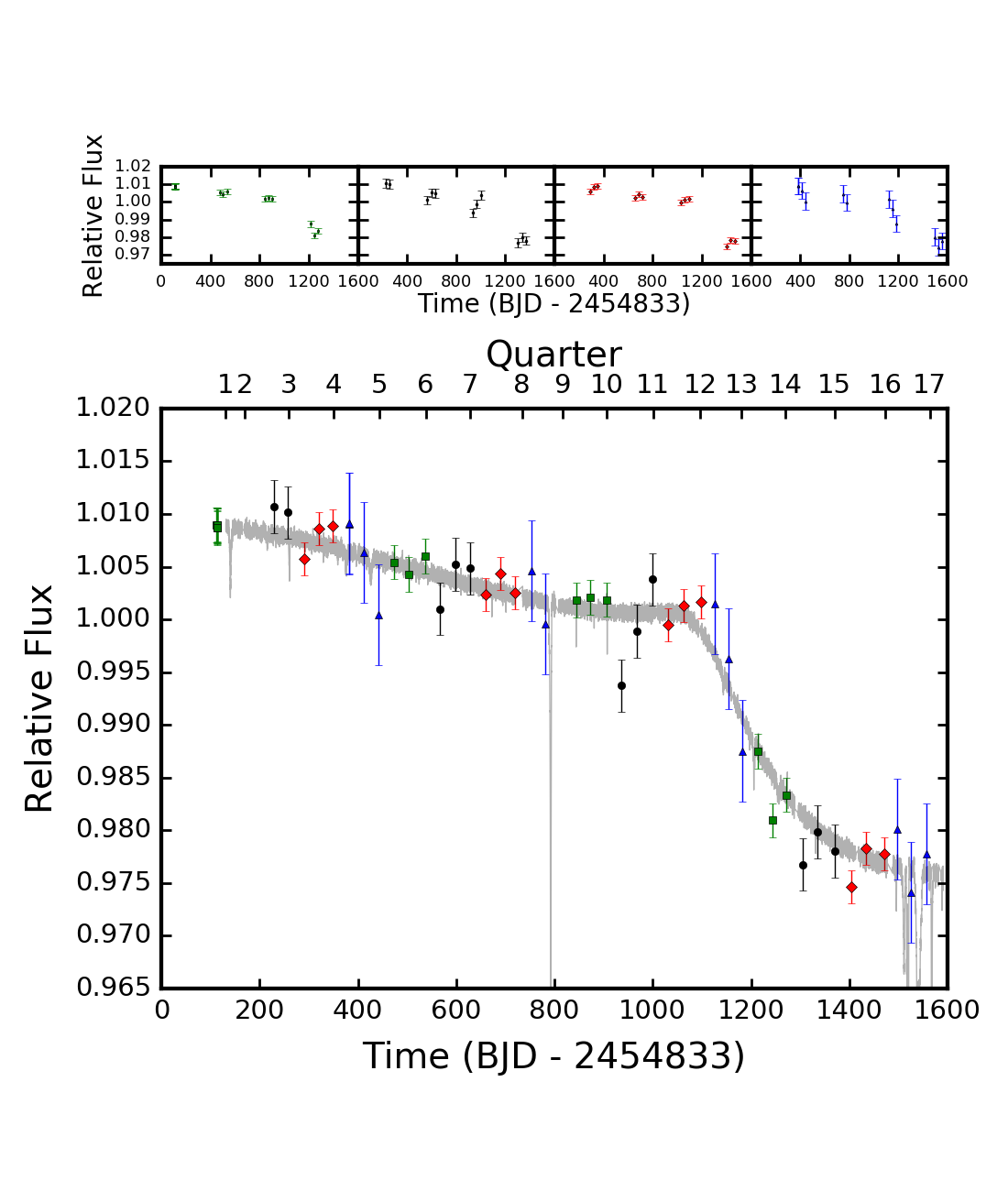
Kepler has measured short-term variations in the observed flux of hundreds of thousands of stars as a part of its search for exoplanets. During this search, signs of long-term variability in the stars are intentionally destroyed. Full-frame image (FFI) data from Kepler provide an opportunity to recover this variability to better measure long-term photometric variations. We've developed a method to do just that, which we've applied to KIC 8462852 to understand its environment and to 5,000 Sun-like stars to understand their starspot and facular coverage. I'm excited about applying this to a larger sample of stars, and combining it with observations of stars over longer time baselines, such as with TESS, Roman, and the Rubin Observatory, to understand how stellar fundamental parameters affect the magnitude and evolution of stellar activity, and the implications for planetary habitability.


Planetary Dynamics with TESS

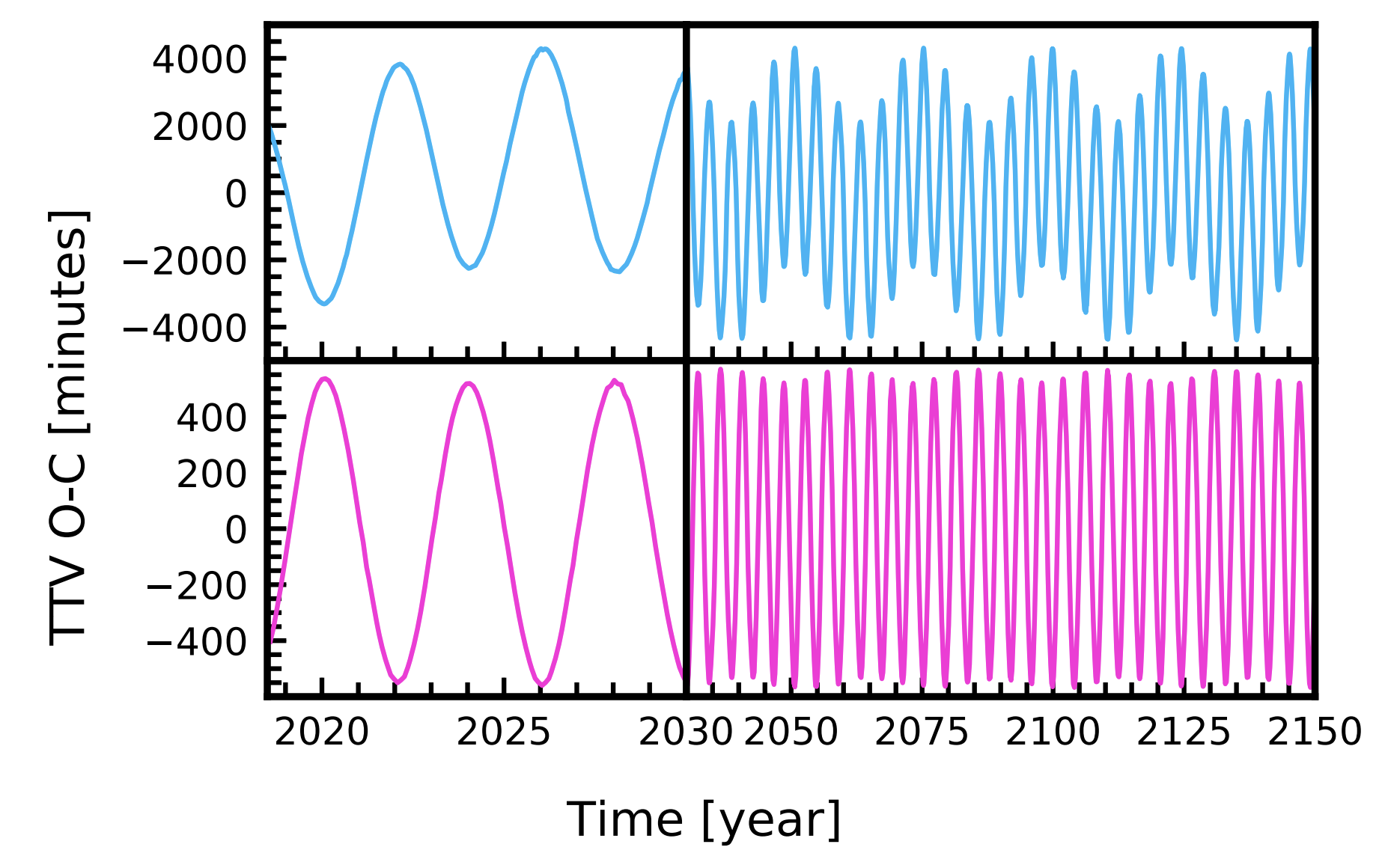
The NASA TESS mission has provided us with data on millions of stars, many of which host orbiting planets. TESS has now observed for longer than the primary Kepler mission, enabling transit and eclipse timing variations to become apparent in this dataset. With the large Full-Frame Images from this mission, there is still a lot to explore. We are searching these FFIs to find new planets, both through their transits and through the dynamical signatures they impart on their neighbours. In the future, I'm interested in developing machine learning techniques to characterize planetary signals and find signs of dynamical perturbations in planetary systems that can be used in both the TESS dataset and upcoming transit surveys.


Searching for Circumbinary Planets via Apsidal Precession

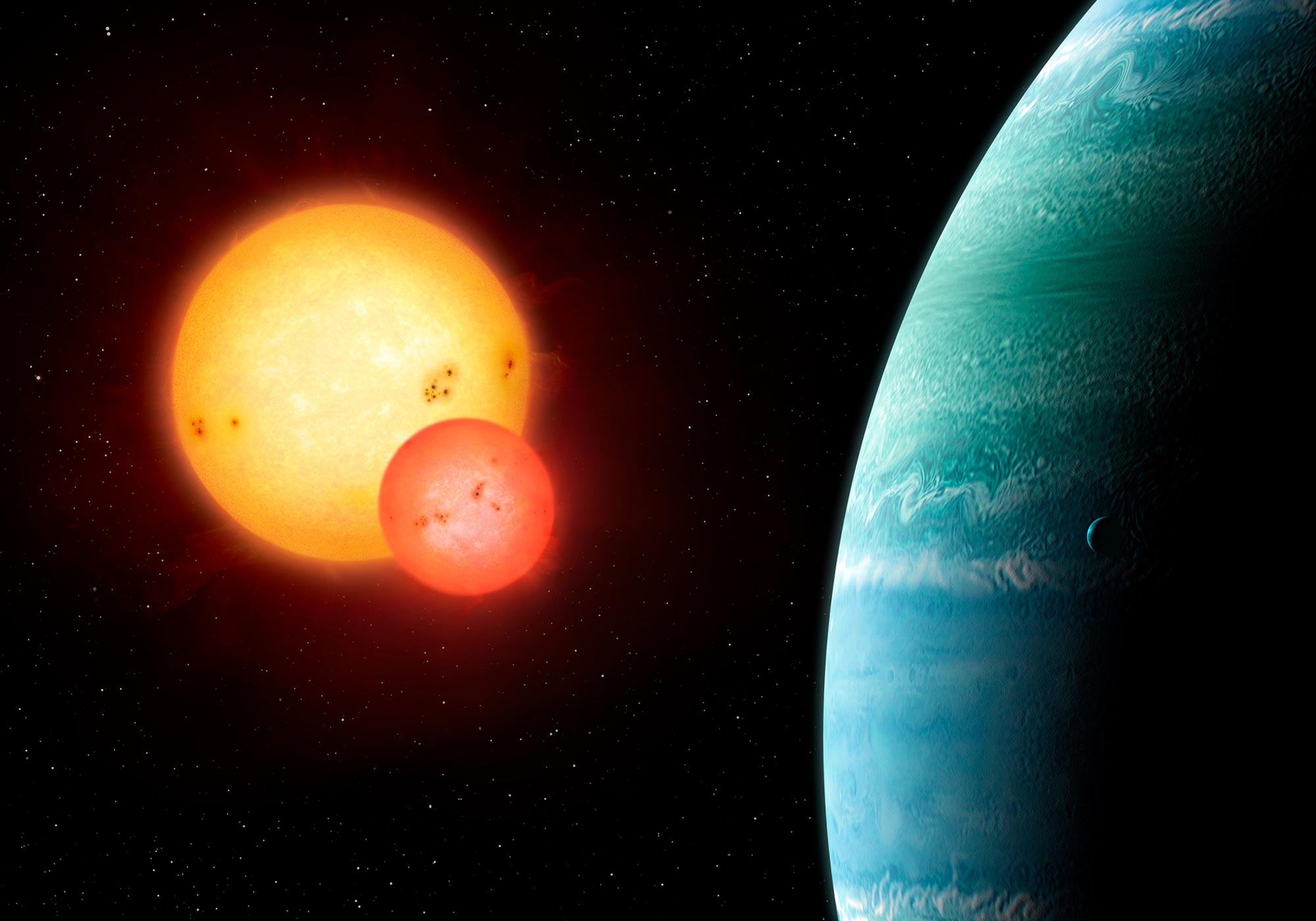
The Kepler and TESS telescopes have combined to find more than a dozen circumbinary planets, which orbit around two stars instead of only one. These planets provide the opportunity to understand how planetary systems form and evolve in dynamically complex environments, and can inform observations of similarly complex systems, such as those in resonant configurations around single stars. Those circumbinary planets have all previously been found by the transit method, limiting us to systems that are coplanar between the orbital axis of the host binary and the planet itself. We have approached the search for these planets in a different direction, searching for signatures of apsidal precession in stellar eclipsing binaries which must be caused by a third body in the system. While the precession signal itself could be caused by third star or other object (maybe even a black hole), with careful RV monitoring we can determine which systems likely host planets. We've begun this work and recently announced our first tranche of possible planet candidates, and are now extending this work to include new data and to begin following up our candidates. We have recently been awarded an Australian Research Council Discovery Project grant to do this project, and are happy to collaborate with others on these projects.

Curriculum Vitae

Click on the button below for a PDF of my CV. (Last updated 24 February 2026.)
A complete list of my publications and related metrics can be found at the NASA ADS.

Click for CV (PDF)